Meditation & Yoga
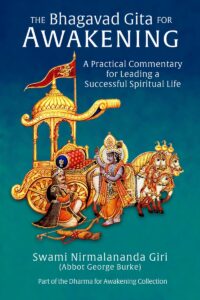
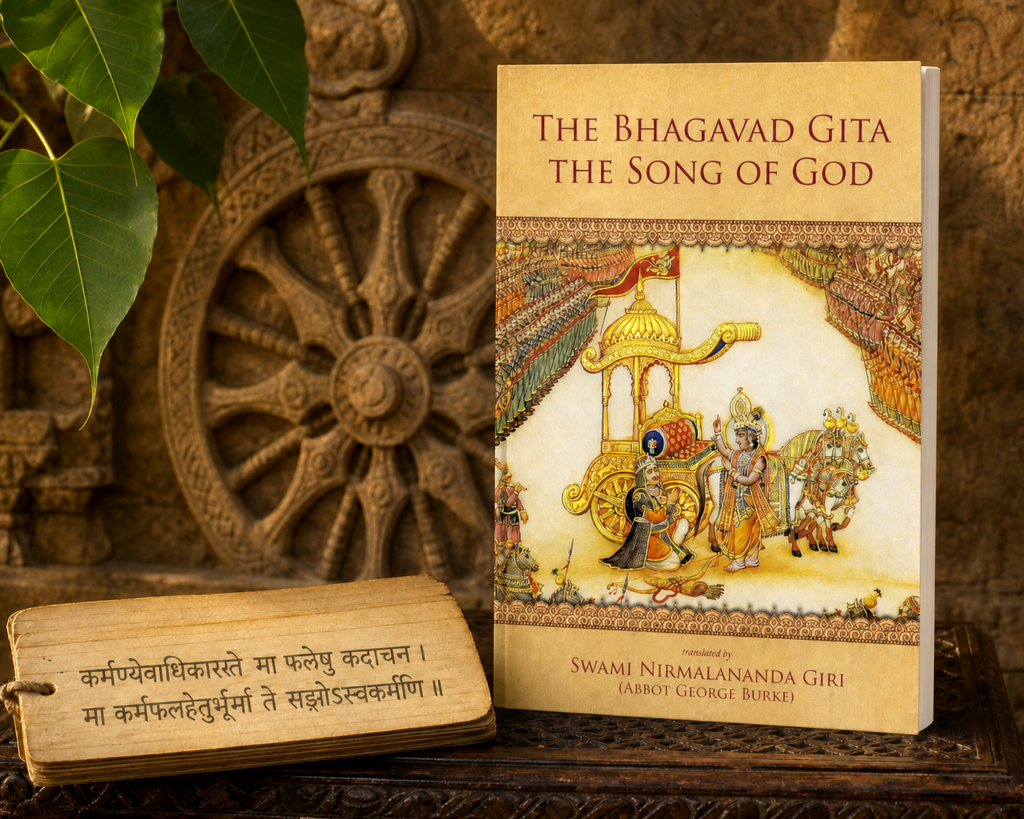
The Bhagavad Gita—The Song of God

The Bhagavad Gita is one of the foundational scriptures of India and one of the world’s enduring spiritual classics. Set on the battlefield of Kurukshetra, it takes the form of a dialogue between Sri Krishna and the warrior Arjuna at the moment when action can no longer be postponed.
Arjuna’s crisis concerns duty, conscience, identity, and spiritual understanding. Krishna’s response reaches far beyond the immediate battlefield to the central questions of human life: Who am I? How should I act? What is the Self? What is God? How can action, knowledge, devotion, meditation, and spiritual discipline lead to liberation?
Swami Nirmalananda Giri’s English translation is designed for clarity without flattening the depth of the Sanskrit. Important Sanskrit terms can legitimately carry several shades of meaning, and this version sometimes preserves or indicates those alternatives rather than forcing the reader into a single narrow English equivalent. The result is readable while remaining especially useful for careful study.
The Gita is not merely speculative philosophy. Its teaching concerns the actual work of spiritual life: self-mastery, meditation, right action, detachment, knowledge of the Self, devotion to God, and liberation. Again and again, Krishna relates spiritual truth to the choices, responsibilities, and inward disciplines through which realization is approached.
This translation is suitable both for a first encounter with the Gita and for experienced students seeking a clear version for repeated reading, meditation, and study. It presents the scripture itself as a continuing guide to Self-knowledge, spiritual practice, and life in the world.
A book to live with
Why Read This Book?
A clear translation for serious study: readable English preserves important nuances and alternative meanings carried by the Sanskrit.
A complete spiritual path: knowledge, meditation, devotion, right action, self-discipline, and liberation are brought into one integrated teaching.
Wisdom for the decisions of life: Krishna’s teaching begins with Arjuna’s real crisis and continually returns spiritual truth to how one should live and act.
A scripture to return to again and again: the Gita rewards repeated reading, meditation, and sustained study rather than a single encounter.

Experience the writing
From the Book
Bhagavad Gita · English translation by Swami Nirmalananda Giri
The Self Is Never Slain
Know indeed that That by which all this universe is pervaded is indestructible. There is no one whatsoever capable of the destruction of the Eternal. (2:17)
These bodies inhabited by the eternal, indestructible, immeasurable, embodied Self are said to come to an end. Therefore, fight! (2:18)
He who thinks the Self is the slayer and he who thinks the Self is slain: neither of the two understands. The Self slays not, nor is it slain. (2:19)
Neither is the Self slain, nor yet does it die at any time; nor having been will it ever come not to be. Birthless, eternal, perpetual, primeval, it is not slain whenever the body is slain. (2:20)
In what way can he who knows this Self to be indestructible, eternal, birthless and imperishable, slay or cause to be slain? (2:21)
Even as a man casts off his worn-out clothes and then clothes himself in others which are new, so the embodied casts off worn-out bodies and then enters into others which are new. (2:22)
This Self by weapons is cut not; this Self by fire is burnt not; this Self by water is wet not; and this Self is by wind dried not. (2:23)
This Self cannot be cut, burnt, wetted, nor dried. This primeval Self is eternal, all-pervading, and immovable. (2:24)
Unmanifest, unthinkable, this Self is called unchangeable. Therefore, knowing this to be such, you should not mourn. (2:25)
Bhagavad Gita · English translation by Swami Nirmalananda GiriEvenness of Mind Is Yoga+
Your authority is for action alone, never to its fruits at any time. Never should the fruits of action be your motive; and never should there be attachment to inaction in you. (2:47)
Steadfast in yoga, perform actions abandoning attachment, being indifferent to success or failure. It is said that such evenness of mind is yoga. (2:48)
Action is inferior by far to buddhi yoga. Seek refuge in enlightenment; pitiable are those who are motivated by action’s fruit. (2:49)
He who abides in the buddhi casts off here in this world both good and evil deeds. Therefore, yoke yourself to yoga. Yoga is skill in action. (2:50)
Bhagavad Gita · English translation by Swami Nirmalananda GiriTake Refuge in Me Alone+
The Lord dwells in the hearts of all beings, causing them by his maya to revolve as if mounted on a machine. (18:61)
Fly unto him alone for refuge with your whole being. By that grace you shall attain supreme peace and the eternal abode. (18:62)
Thus has the knowledge that is more secret than all that is secret been expounded to you by me. Having reflected on this fully, act in the way you wish. (18:63)
Hear again my highest teaching, most secret of all, because you are dearly loved by me; therefore I shall tell you what is for your good. (18:64)
Fix your mind on me, be devoted to me, sacrifice and bow down to me. In this way you shall truly come to me, for I promise you–you are dear to me. (18:65)
Abandoning all duties, take refuge in me alone; then I shall free you from all demerits, do not grieve. (18:66)
Continue the journey
Continue Exploring
Companion books and approved resources for going further.