
Meditation & Yoga
The Inspired Wisdom of Sri Gajanana Maharaj
A Practical Commentary on Leading an Effectual Spiritual Life

The teachings of Sri Gajanana Maharaj are striking for their simplicity. Again and again he returns the spiritual aspirant to a few essentials: meditate, discriminate, live rightly, test what you are taught through experience, and refuse to become dependent upon outward personalities or institutions for the realization that must ultimately arise within.
Yet the very simplicity of his language can conceal the depth of what he is saying—especially for readers who do not already possess a background in Yoga, Vedanta, and Sanatana Dharma.
In The Inspired Wisdom of Sri Gajanana Maharaj, Swami Nirmalananda Giri takes up Maharaj’s teachings one by one and provides the context, explanation, and practical expansion needed to bring their implications fully into view. The result is not a biography of the saint—that role belongs more directly to Light of Soham—but a sustained commentary on how Maharaj’s wisdom can be understood and lived.
Swami Nirmalananda draws upon the broader traditions of yoga and Vedanta while keeping the emphasis firmly where Maharaj himself placed it: on direct experience, spiritual self-reliance, discrimination, meditation, right living, and steady practice.
The Book is especially suited to slow reading. A teaching may occupy only a few lines, but the accompanying commentary opens it into a practical subject for reflection and sadhana. Read in this way, The Inspired Wisdom of Sri Gajanana Maharaj becomes less a book to finish than a companion to practice—one that continually turns the reader back toward meditation and the actual work of spiritual transformation.
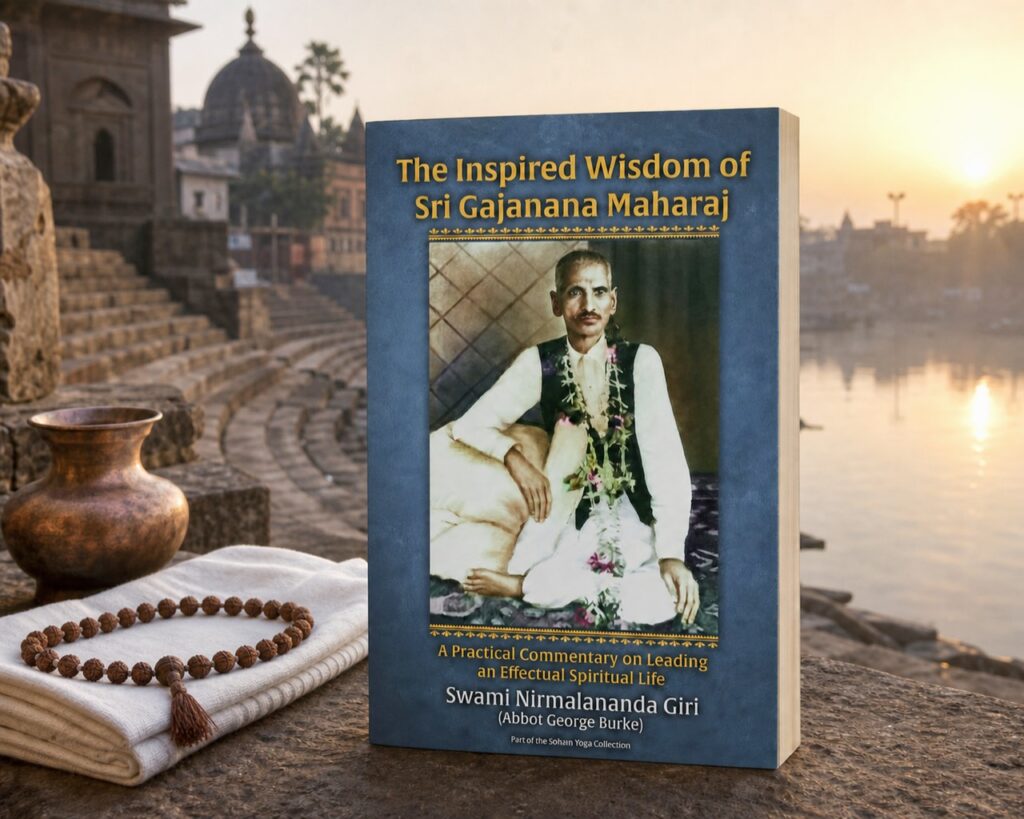
A book to live with
Why Read This Book?
Study Gajanana Maharaj’s teachings with the background and explanation needed to grasp their deeper yogic and Vedantic meaning.
See how simple spiritual counsels about meditation, conduct, discrimination, and Self-knowledge become practical guidance for daily sadhana.
Learn why genuine spiritual teaching should foster inner independence, direct experience, and personal responsibility rather than dependence upon a guru.
Use the Book as a contemplative companion—reading a short teaching and commentary before meditation or as material for continuing spiritual reflection.

Experience the writing
From the Book
Featured excerpt
Practice and Discover for Yourself
Dear N., you must have read various books on this subject, but I have told this to you in brief, not from what I have read but from what I have experienced in myself. You will be fully convinced of its truth when you also will get that Self-experience.
Countless books have been written about yoga and meditation, but they nearly always prove to be valueless except for the opportunists who wrote and published them. A true yogi does not repeat back what he has read, but speaks from his own direct experience—from the transformation of his consciousness. Such a yogi does not ask others to “believe” anything, but rather to practice and discover for themselves what is true. And once he tells them the process of meditation his work is ended and they are able to go on through their own sadhana practice.
Right from the beginning a yogi must be totally self-reliant. Certainly he needs to learn the process of meditation, but that is very simple, something even a child can do. He does not depend on anyone or anything but his own self-effort. Unlike false gurus who are slave-takers, a genuine teacher shows the aspirant how to liberate himself through meditation. And then his task is done. This is very well illustrated by the life of Sri Gajanana Maharaj. (See Light of Soham.)
Excerpt twoTest Everything Like Gold in Fire+
Every step in this path of yoga should be minutely scrutinized by the inner sight and tested by experience and reasoning.
But how will a person have the necessary inner sight, experience and reasoning? First, just through their innate intelligence. But mostly through their own insight gained by their sadhana practice which must be supported by the observance of the principles of yama-niyama.
I would never tell you to place your blind faith in anyone, as I consider that to do so leads to self-ruin.
Blind faith certainly leads to inner and outer destruction, but it is necessary for the continuance of yoga and guru cults. Notice that Maharaj says self-ruin. Ultimately considered, it is not the fake guru or the fake yoga, but the cooperation, willful blindness, rationalization and continuing “loyalty” of the dupe-disciple that destroys him. I do not speak just from observation but from my own unfortunate experiences spanning half a century of being a willing slave and denier of my own truth—a betrayer of my own Self.
Awaken your discriminating power, test everything in the light of your experience as you test gold in fire and on the touchstone.
The first step in awakening and developing your discriminating power (viveka) is to use what you have already. Meditation supports the growth of discrimination also because it clarifies and intensifies the power of the mind (buddhi). The very experience of meditation accomplishes this because all the experiences of authentic yoga meditation occur as the mind and consciousness are being expanded and evolved.
Of course, I am speaking only of Soham meditation. Based on decades of practicing dud yogas and following dud gurus (“dud” is a very mild word for them), I can tell you from my own experience that Soham sadhana alone truly develops atmic awareness, whereas the false yogas delude through experiences of subtle energies and not liberation of consciousness. As a Soham yogi you can “test everything in the light of your experience as you test gold in fire and on the touchstone.” Soham Yoga: The Yoga of the Self and Light of Soham show you how.
If you think that there is some sense in what I say, try to realize it in your experience.
Do not just accept and believe, but experience it yourself by the diligent practice of Soham sadhana.
Excerpt threeMake This Your Routine+
Make this as your routine: meditate at least for an hour or so. Thus you will quickly have experience.
We do not just believe in Soham, we unite with it through Soham sadhana. “For him who does not meditate there is no peace or happiness” (Bhagavad Gita 2:66), so the Soham yogi understands that his liberation is attained only through Soham meditation. Meditation must become as much a part of our life as waking and sleeping. The more we meditate the sooner realization becomes ours. And here we see that Gajanana Maharaj tells us that one hour is the shortest time we should meditate. (Not that we should foolishly neglect meditation if at some times we do not have a full hour to meditate.) Three to four hours daily is an ideal minimum.
By right behavior, right thoughts, philanthropy and reading spiritual books, understand what is truth and what is not.
This is a most informative statement. Meditation is not enough. Right behavior and right thoughts, which are produced by the observance of yama and niyama, are necessary. And so is the helping of others motivated by kindness and mercy. The study of spiritual books is also a requisite—not an option—though yoga and guru cults usually discourage it. Only with these supports to our meditation can we hope to understand what is truth and what is not. There are no exceptions.
Consider anyone as a child of the Almighty; salute them lovingly and create for yourself peace on earth.
The universal law is: “love thy neighbour as thyself” (Leviticus 19:18; Matthew 19:19, 22:39; Mark 12:31; Luke 10:27; Romans 13:9; Galatians 5:14; James 2:8). To create for yourself peace on earth, “Follow peace with all men” (Hebrews 12:14)—a peace of loving-kindness.
Continue the journey
Continue Exploring
Companion books and approved resources for going further.
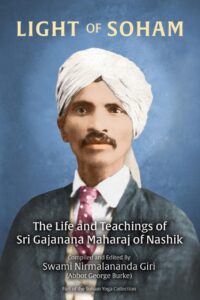
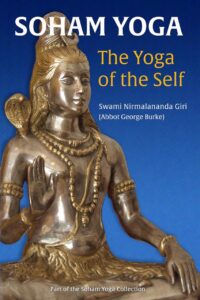
Free online resource
