Meditation & Yoga
The Pathway to Awakening
Three Essentials for a Successful Spiritual Life

The Pathway to Awakening is a concise, practical guide to inner transformation. Swami Nirmalananda Giri outlines three essentials for a successful spiritual life: Soham mantra meditation, the ethical foundations of Yama and Niyama, and a vegetarian diet with complete abstinence from alcohol, nicotine, and mind-altering substances.
In clear, step-by-step language, the booklet shows how to intone Soham with the breath, explains why Yama/self-restraints and Niyama/observances are not mere “rules” but methods of yoga, and demonstrates how a compassionate, pure diet refines mind and body for meditation.
Whether you’re beginning practice or deepening it, this handbook brings together meditation, conduct, and diet as a single, workable path—simple, steady, and effective.
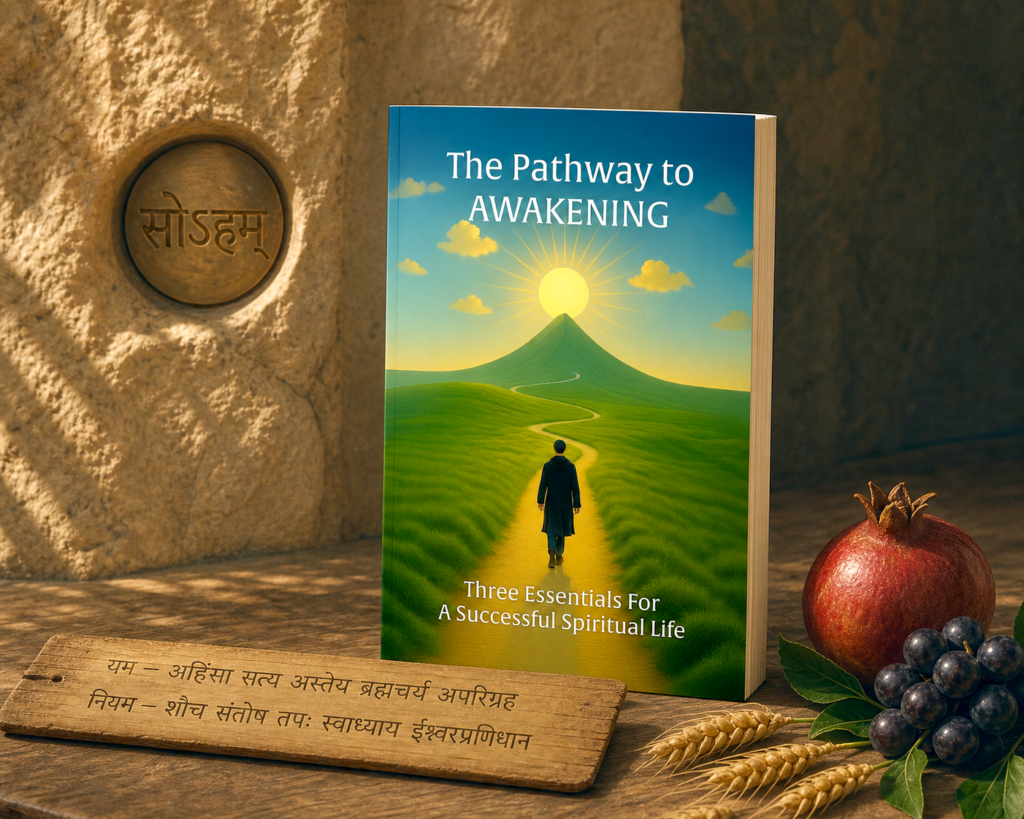
A book to live with
Why Read This Book?
Learn the natural practice of Soham Yoga Meditation by joining the mantra to the breath.
Understand Yama and Niyama as active methods of yoga rather than merely external rules.
See how a vegetarian diet and freedom from intoxicants support clarity, compassion, and meditation.
Bring meditation, ethical conduct, and daily physical choices together as one workable spiritual path.

Experience the writing
From the Book
The three essentials
Three Main Steps to Perfection
There are three main steps to perfection in our search for Liberation/Self-realization
1) Spiritual/metaphysical: Soham Yoga Meditation.
2) Moral/ethical: Observation of Yogic Ethics–Yama and Niyama.
3) Physical/mental: Vegetarian Diet and total abstinence from alcohol, nicotine and all mind-altering substances.
A section on each one of these explains their various aspects and gives practical advice for their practice-observance.
Part One · MeditationSoham Yoga Meditation+
Breath and sound are the two major spiritual powers possessed by us, so they are combined for Soham Yoga practice. It is very natural to intone Soham in time with the breathing. It is simple and easy.
Part Two · Yogic ethicsPractical Foundations of Yoga+
Yama and Niyama are often called the Ten Commandments of Yoga, but they have nothing to do with the ideas of sin and virtue or good and evil as dictated by some cosmic potentate. Rather they are determined by a thoroughly practical, pragmatic basis: that which strengthens and facilitates our yoga practice should be observed and that which weakens or hinders it should be avoided. It is not a matter of being good or bad, but of being wise or foolish. Each one of these Five Don’ts (Yama) and Five Do’s (Niyama) is a supporting, liberating foundation of yoga.
Continue the journey
Continue Exploring
Companion books and approved resources for going further.